Mercy’s National Championship Climb
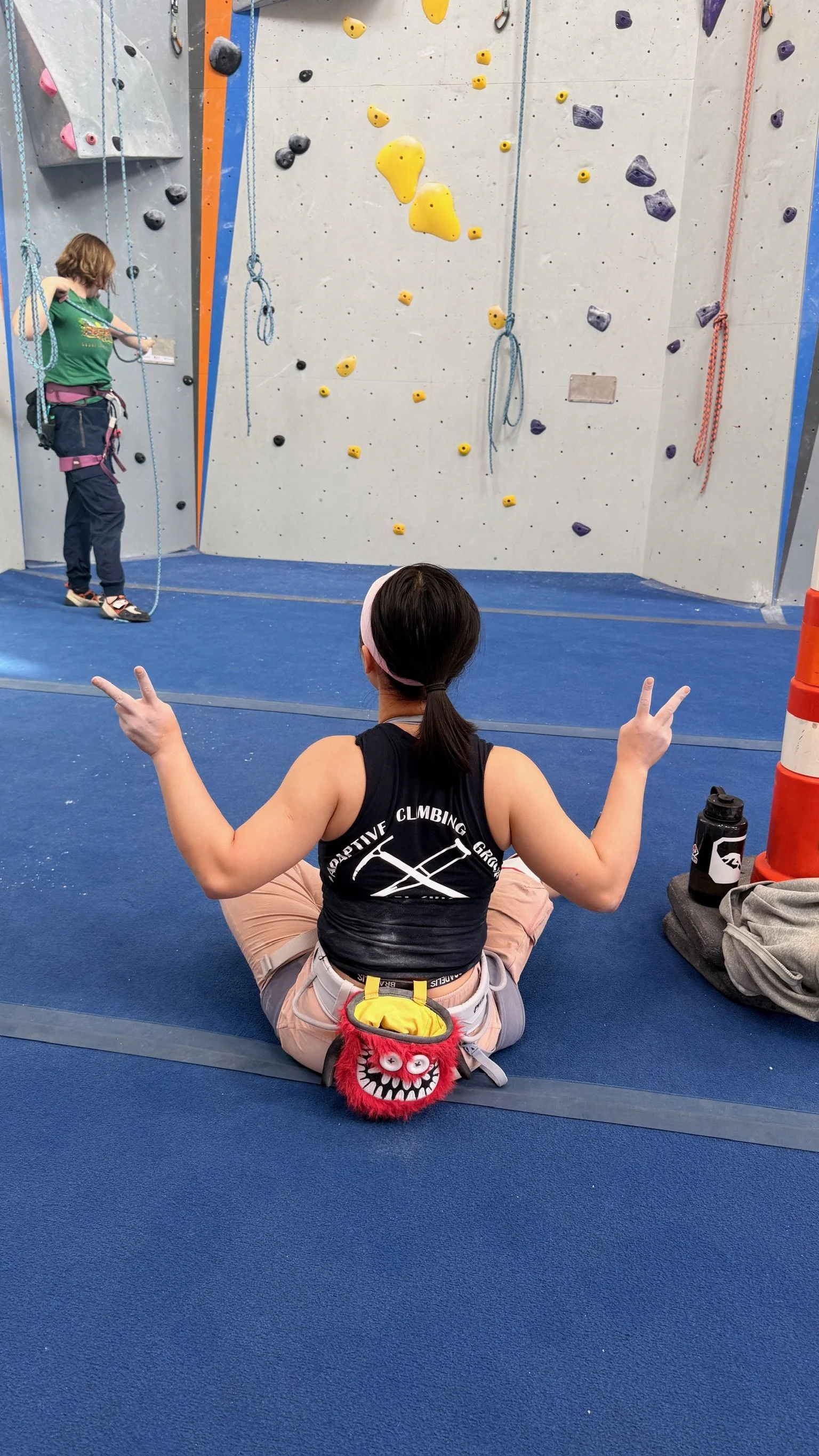
When Mercy first started climbing at Central Rock Gym in Syracuse, she was often the only amputee on the wall. That reality shaped how she saw herself. Certain moves and routes felt off-limits and built for other people.
Her journey did not begin with competition.
It began with curiosity.
Last June, she discovered an adaptive climbing group through Syracuse Prosthetic & Orthotic Center and signed up for the monthly adaptive climbing night. What started as “I’ll just try it” quickly became something more.
A Moment That Changed Everything
After competing in Boston at a USA Climbing event and taking first place, Mercy gained more than a win. She gained perspective.
She saw climbers who looked like her moving with strength and confidence.
No more excuses.
That moment reshaped how she approached the wall and herself.
Stepping Onto the National Stage
That mindset carried her to the 2026 USA Climbing Para Climbing National Championships in Katy, Texas.
When she first walked into the venue, reality hit.
“I was feeling pretty anxious,” Mercy shared. “The walls were much higher than what I was used to… they looked really intimidating. Since it was my first Nationals and I was competing against former world and U.S. champions, I was incredibly nervous. It really put my full-body balance and my ability to read the route to the test.”
This wasn’t just another competition.
It was a completely different level.
The walls were taller.
The routes were harder.
The stakes were higher.
The Mental Game on the Wall
Competition climbing demands more than strength. It demands focus.
And sometimes, that’s the hardest part.
“I was incredibly nervous, and there was no way to fully shut that feeling off,” she explained. “I focused on deep breathing and stayed active in the warm-up area to calm my mind.”
Mercy prepared her strategy carefully during qualifiers. But once she started climbing, something familiar happened.
“My mind tends to go completely blank,” she said. “I forgot my original strategy… and when I hit a crux, I tried to improvise. It didn’t work out, and I fell.”
In finals, the pressure intensified. One route. One attempt. No second chances.
This is what high-level competition looks like.
Not perfection, but persistence.
Strength Behind the Scenes
Getting to Nationals took discipline.
Mercy trains at least four times per week, often climbing for two to three hours at a time. She also dedicates time to lower-body strength training, building the power and control needed for high, technical movements.
That preparation mattered.
But so did resilience.
“I trained so hard that I actually injured my shoulder,” she shared. “I didn’t reach my full potential because of that, but I’m proud I didn’t let it stop me.”
And that may be the most powerful part of her story.
Built for the Wall
Mercy uses a prosthetic leg designed for everyday mobility, providing the stability and support she needs in daily life.
For climbing, she uses a second, specialized prosthetic leg, designed specifically for athletic performance on the wall. This climbing prosthesis allows for greater mobility, flexibility, and precision during technical movements.
When insurance would not cover a second prosthetic, her care team stepped in. Through Syracuse Prosthetic & Orthotic Center and the Challenged Champions Fund, Mercy was provided with the specialized climbing leg she needed to pursue her goals.
That support helped turn possibility into reality, and allowed her to show up on the wall with confidence.
Just the Beginning
The 2026 USA Climbing Para Climbing National Championships represent the highest level of adaptive climbing in the country.
And with para climbing set to debut at the 2028 Paralympic Games, the sport is only growing.
For Mercy, this experience was not a finish line.
It was a beginning.
She once believed certain moves were not for her.
Now she studies the route, chalks up, and climbs anyway.
And she’s just getting started.
Redefining What Success Looks Like
When Mercy reflects on her journey, it’s not about rankings.
It’s about showing up.
“Just making it to this competition is what makes me most proud,” she said. “It’s such a high-level event… and you need a lot of courage just to show up.”
From her first adaptive climbing night to competing on a national stage in less than a year, her growth has been extraordinary.
But ask her what matters most, and the answer is simple.
Community.